
BLI Analysis
Biolayer Interferometry (BLI) is a label-free, optical biosensing technique that enables real-time analysis of biomolecular interactions. It measures changes in the interference pattern of white light reflected from a biosensor surface as molecules bind or dissociate, providing quantitative insights into binding events. It has many applications in antibody discovery:
Affinity Ranking
Rapidly compares binding strengths of multiple antibodies to a target antigen by measuring equilibrium binding responses. Enables prioritization of candidates based on relative affinity.Kinetics Analysis
Determines association (kon) and dissociation (koff) rates, yielding precise affinity constants (KD). Supports mechanistic understanding of binding behavior and informs lead optimization.Competition Assays
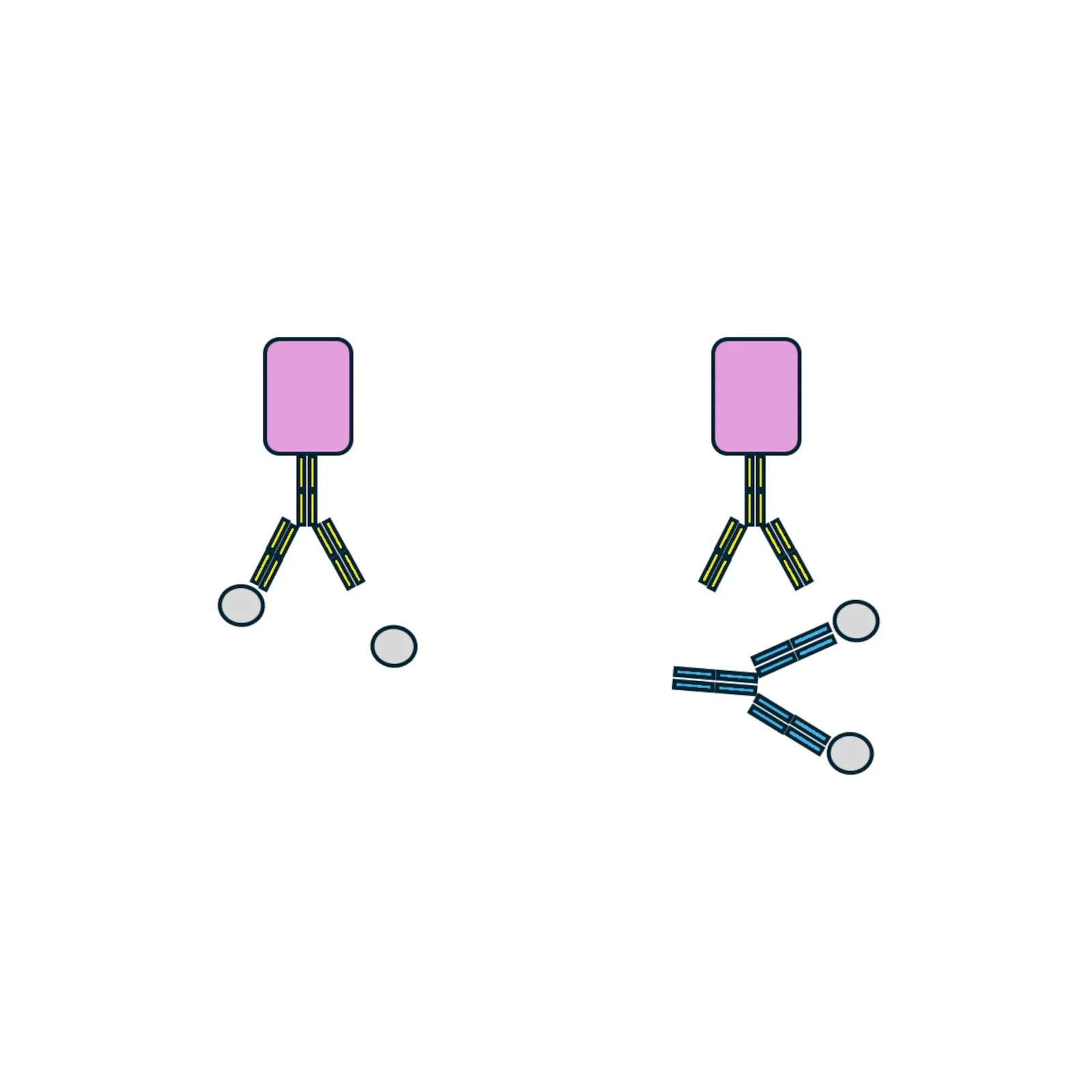
Assesses whether two molecules compete for the same binding site by sequentially exposing the biosensor to each. Useful for characterizing blocking antibodies or receptor-ligand interactions.Epitope Binning
Groups antibodies based on overlapping or distinct binding epitopes using pairwise competition formats. Facilitates selection of diverse antibody panels and informs IP strategy.